
The science of
clean air.
Twenty long-form articles on filtration media, ozone safety, acoustics, sensors, energy and the future of indoor air - written by the people who build the machines. Published from February 2023 to November 2026.
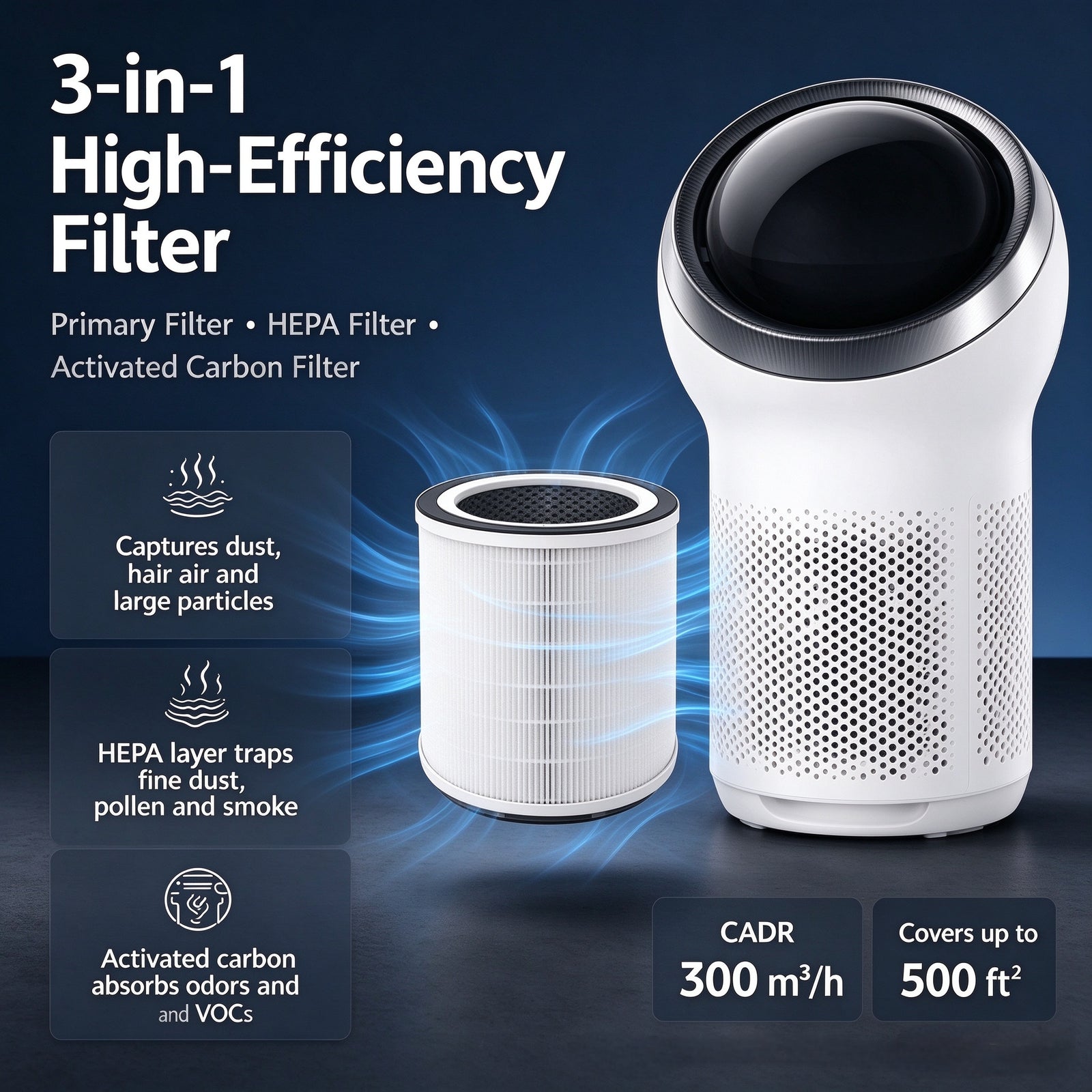
Air Purification in 2026: Standards, Claims and What Comes Next
Three years of this journal, eight models, and a rapidly maturing category. A look at which claims finally became measurable - and the questions still open.
Read article →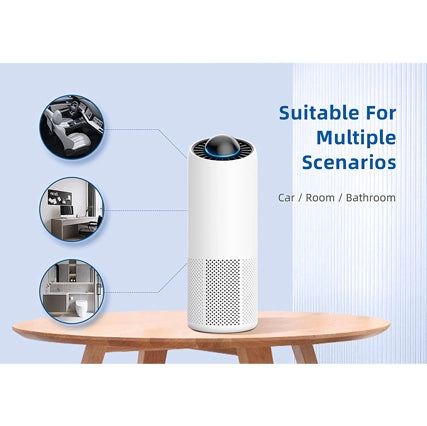
Whole-Home Air: Zoning, Multi-Room Strategies and Sensor Placement
One purifier cannot clean a whole home. A zoning strategy with several smaller units and well-placed sensors often beats a single flagship.
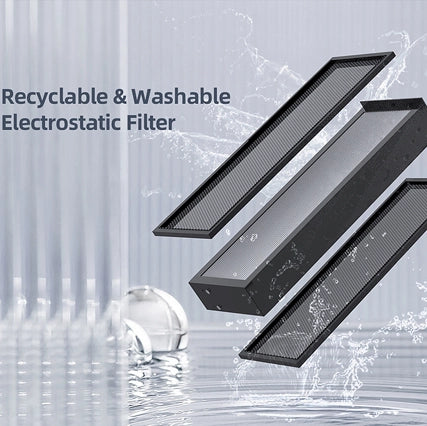
Circular by Design: Recyclable Filter Media and Take-Back
A frank audit of what is recyclable in a purifier today, what is not, and the design changes that would actually move the numbers.
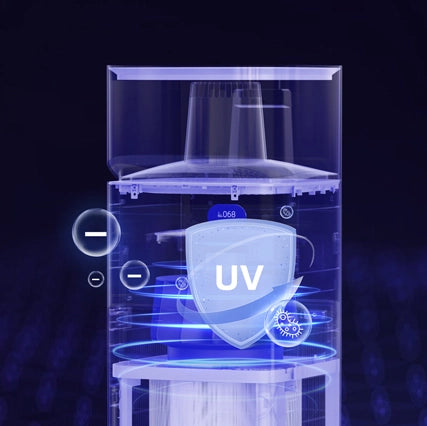
Solid-State Gas Sensors: The Next Sensing Frontier
Particles are well measured. Gases are not. New solid-state and photoacoustic approaches may finally give consumer purifiers a trustworthy VOC channel.
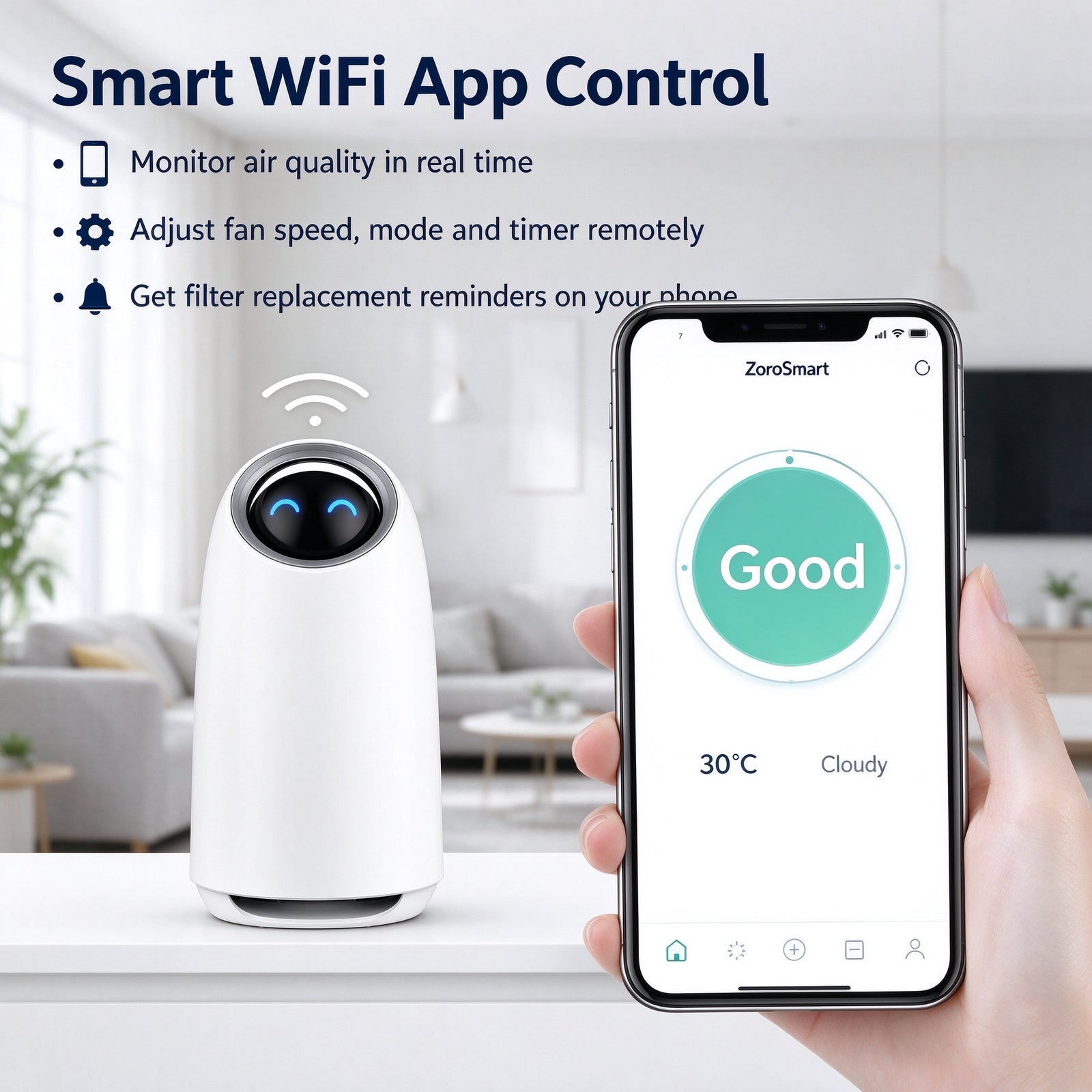
On-Device AI and Anticipatory Air Quality Control
The interesting part of machine learning in a purifier is not a chatbot. It is a tiny model that learns your room and acts before the PM2.5 curve rises.
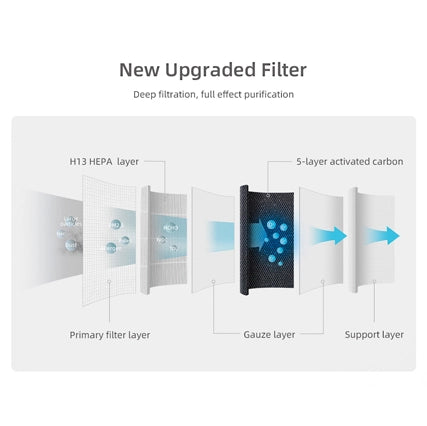
Predicting Filter Life: From Hour Counters to Sensor Fusion
A calendar reminder is a poor proxy for a loaded filter. Combining runtime, fan speed and particle exposure gives a much better answer.
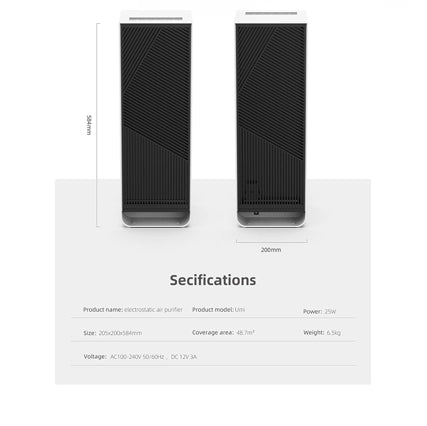
Running 24/7: DC Motors, Standby Power and the Real Energy Bill
Continuous operation is the right way to use a purifier. We do the arithmetic on what that actually costs, and where the energy goes.
New-Build Off-Gassing: How Long Does Formaldehyde Last?
Renovation smell is not a one-week problem. Emission curves, temperature dependence and a realistic plan for the first year of a new home.
Pet Dander and Pollen: Particle Size Is Everything
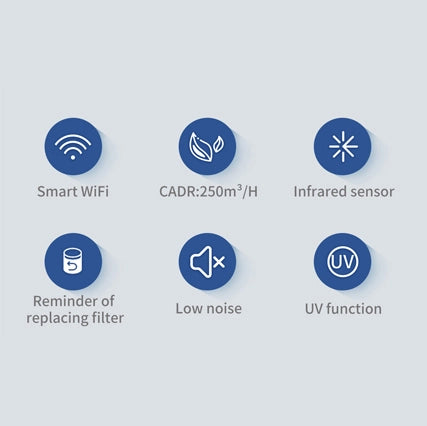
Allergy sufferers are often told to buy the highest-grade filter. Size distribution, air changes and placement usually matter more.
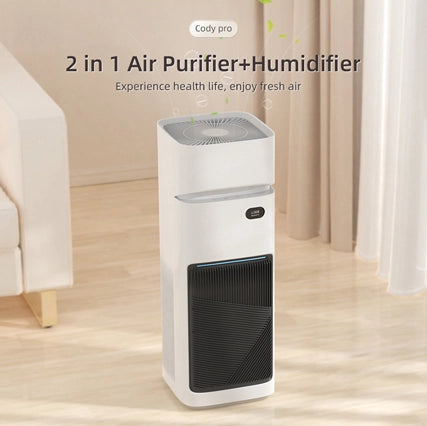
Humidification + Purification: The Case for 2-in-1
Two appliances, one plug, one air path. Combining a humidifier with a purifier is harder than putting both boxes in one shell - here is what changes.
CO2, Ventilation and Why Your Bedroom Feels Stuffy at 3am
A purifier can make air cleaner without making it feel fresher. Carbon dioxide is the reason - and the fix is ventilation, not filtration.
Wildfire Smoke Indoors: A Practical Filtration Playbook
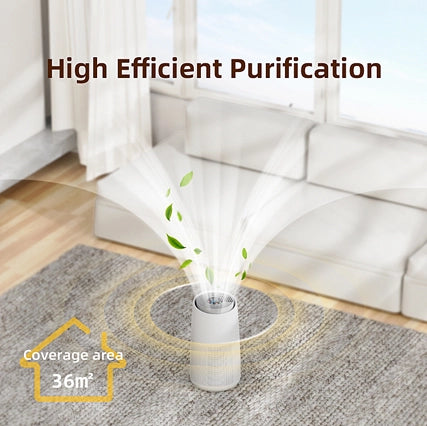
Smoke seasons have become longer and less predictable. What works indoors, what does not, and how to keep a small room breathable for days at a time.
Washable Electrostatic Pre-Filters vs Disposable HEPA
Reusable media sounds obviously better for the planet. The honest answer depends on what the layer is asked to catch, and on whether people actually wash it.
Matter, WiFi and the Smart Purifier: What Actually Matters
App control is easy to add and easy to get wrong. A look at local control, scheduling, privacy and the arrival of Matter in air-care devices.
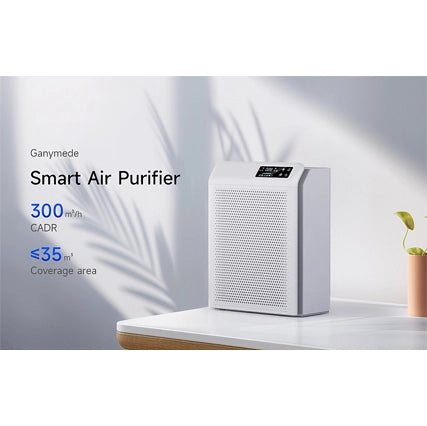
The Acoustics of Quiet: Designing a 20 dB Sleep Mode
Noise is the reason most purifiers end up switched off. We look at blade-pass frequency, duct geometry and why a decibel number needs a spectrum behind it.
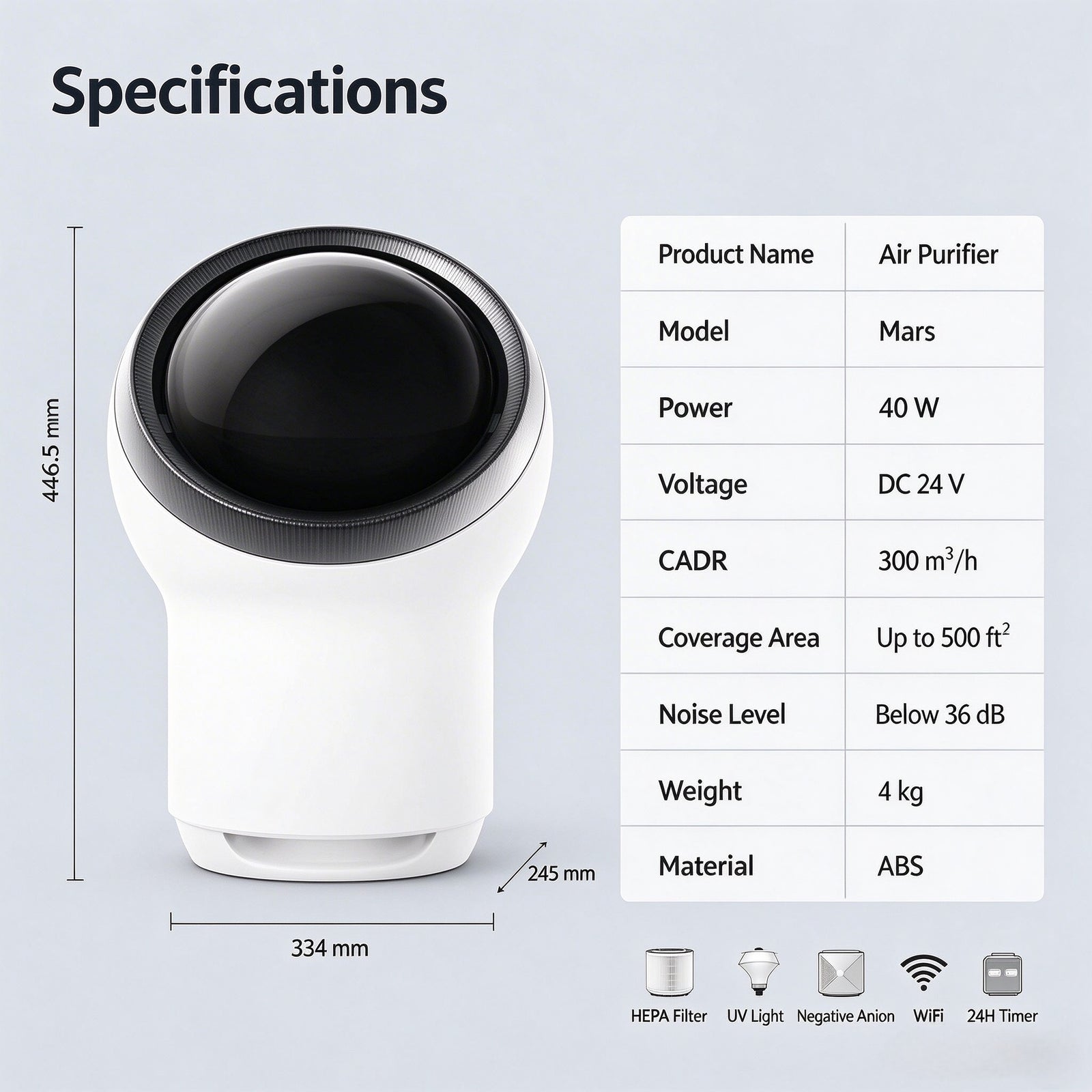
CADR, ACH and Room Size: Sizing a Purifier Properly
Bigger is not automatically better, but undersizing is the most common mistake in home air purification. A short, practical sizing method.
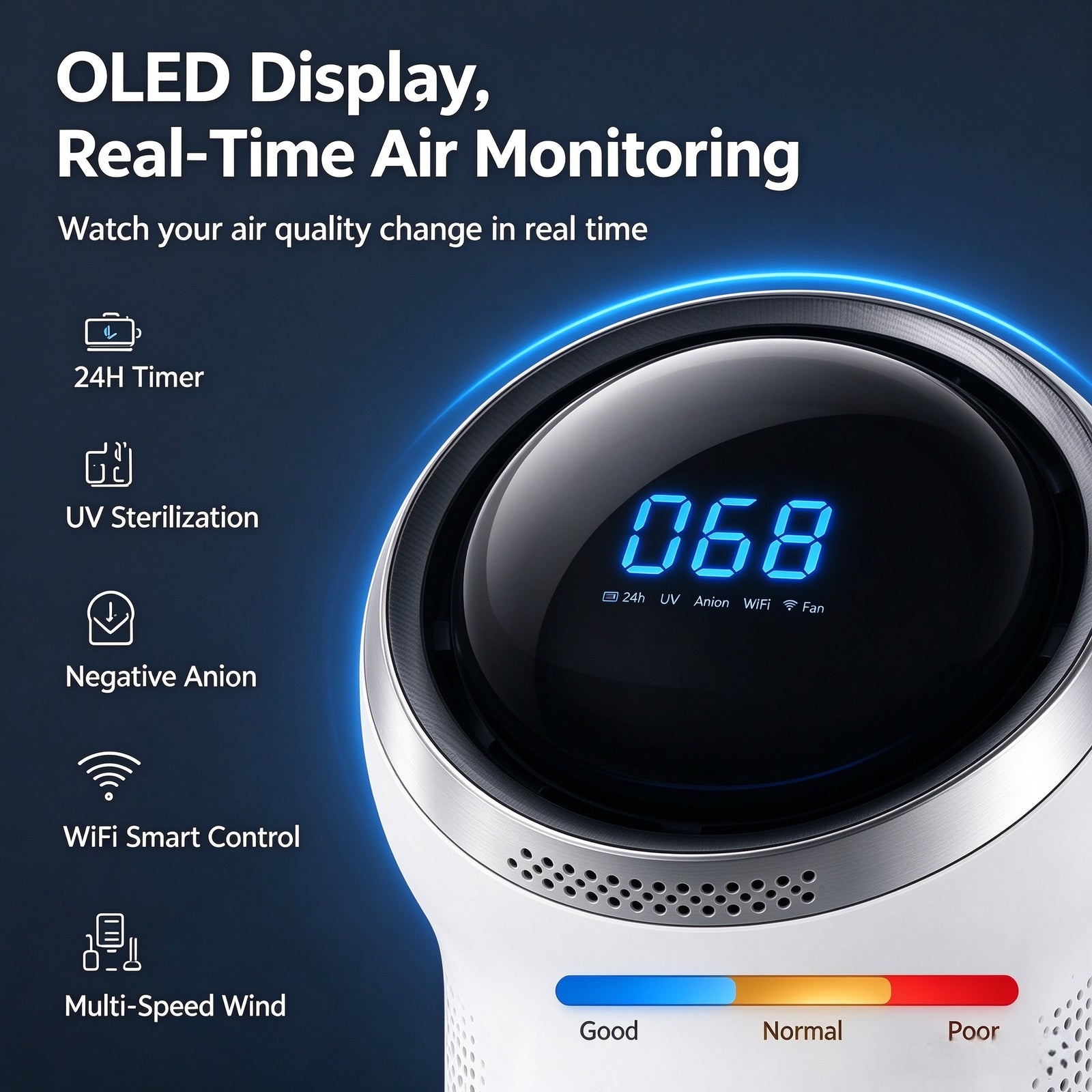
How Laser PM2.5 Sensors Work (and Where They Get It Wrong)
A number on an OLED display feels authoritative. Laser scattering sensors are genuinely useful - but they estimate mass from light, and that inference has known failure modes.
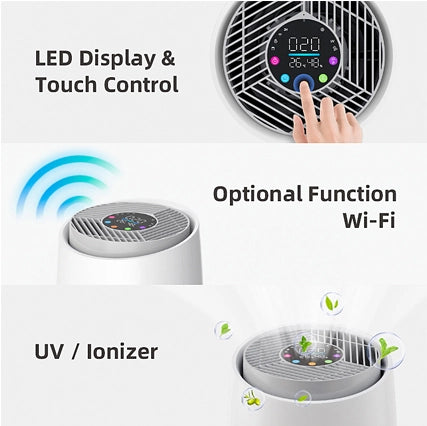
The Ozone Question: Why We Chose Pure Physical Filtration
Ionisation, plasma and UV claims can sound like upgrades. Indoors, they can also create the pollutant you were trying to remove. Here is the reasoning behind our zero-ozone rule.
Formaldehyde, TVOC and the Limits of Activated Carbon
Particles are easy to filter; gases are not. A practical look at what carbon can and cannot do about formaldehyde and the off-gassing from new furniture.
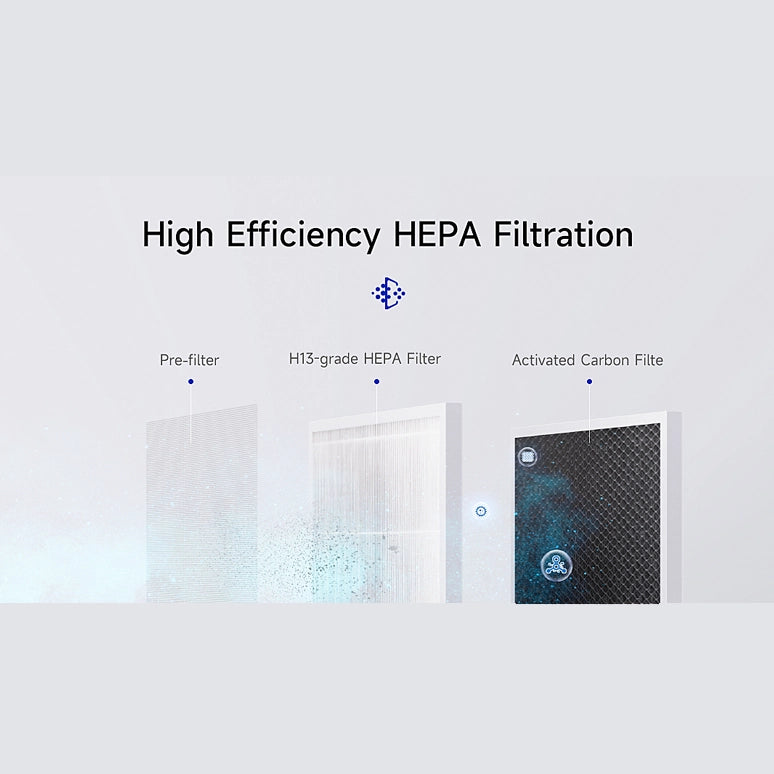
H13 vs H14: What True HEPA Actually Means for Your Living Room
HEPA grades are shorthand for a test result, not a marketing superlative. We unpack the EN 1822 classification and explain why H13 is usually the right answer for a home.
Standards & sources we refer to
Our journal discusses published standards, measurement methods and emerging research. These are the frameworks behind the articles - we label sensor readings as trends, never as calibrated health measurements.
EN 1822
European standard for HEPA/ULPA filter classification and the Most Penetrating Particle Size (MPPS) test.
UL 867 / CARB
US ozone-emission limits and certification programme for air cleaning devices.
WHO Global Air Quality Guidelines
Health-based reference levels for PM2.5 and other indoor/outdoor pollutants.
US EPA Indoor Air Quality
Guidance on ventilation, particulate exposure and indoor source control.
Matter 1.2 (CSA)
Interoperability standard that introduced air purifier and air-quality sensor device types.
AHAM AC-1 / CADR
The clean air delivery rate method behind the coverage figures published on our spec sheets.
Questions about anything we have published?
Our engineers read the mail. Ask us about HEPA grades, ozone, noise or filter waste.
Get in touch →